Crypto crash games: the six titles, the four dials, and what crash gambling actually costs
The shelf
Crash games all run one engine: a multiplier that climbs, a stop nobody on this side of the screen can see coming, and a button that ends the round on your terms. Chicken Road is one of them with the climb cut into lanes. This page takes the whole shelf apart — round structure, risk dials, the arithmetic behind a target multiplier, what a crypto balance changes and what it does not — and then says what to check before picking a crash gambling site. Call it a ranking of the best crypto crash games if you like; what follows is the evidence for one.
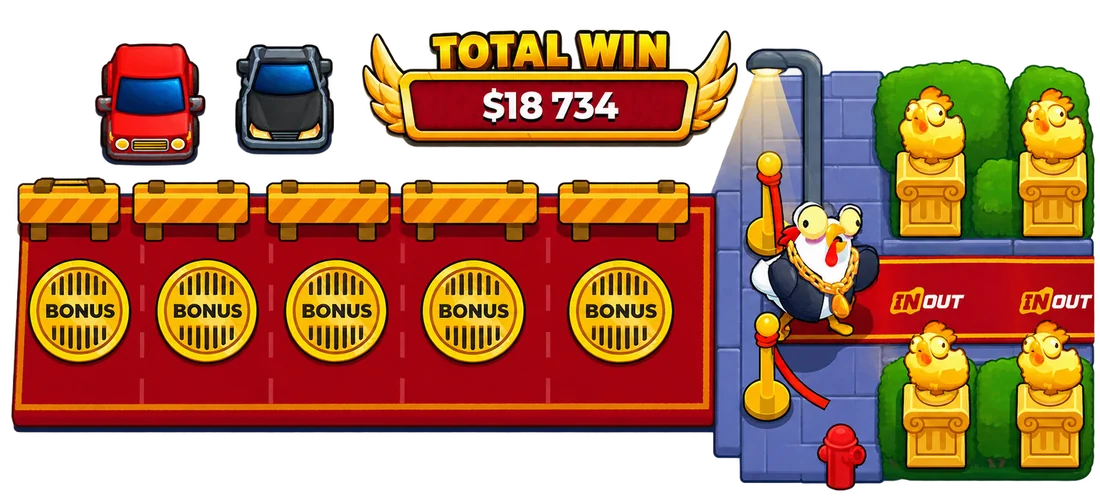
Anybody who plays Chicken Road for a week eventually opens the shelf next to it. Crypto crash games fill that shelf, and this page reads them the way this site reads casinos: on what is actually different, not on whose animation is prettier. Every crypto crash game here is one you can play with bitcoin or USDT in the same lobby that carries Chicken Road.
| Casino | Coins | Withdrawal limit | Before ID check | Operator | Licence | Play |
|---|---|---|---|---|---|---|
| Vave | 6 | not published | case by case | Latcas B.V. | Curaçao Gaming Authority | Play |
| Bitcasino.io | not read | 1,000,000 USDT /week cl. 6.10 | 2,500 EUR | Moon Technologies B.V. | Curaçao Gaming Authority | |
| Rocketpot | 13 | 5,000 USD /month cl. 11.5 | US$2,500 | Danneskjold Ventures B.V. | Curacao | |
| Wild Fortune | 10 | 15,000 EUR /month cl. 11.8 | case by case | Metlait SRL | Anjouan Gaming Board | |
| DuckDice | 10 | not published | case by case | Zentari Limitada | Anjouan Gaming Board | |
| Empire.io | not read | not published | 2,000 USDT | Pixel Entertainment Limited | Anjouan Gaming Board | |
| Metaspins | 8 | not published | case by case | Metaspins N.V. | Curaçao Gaming Authority | |
| Oshi Casino | 10 | 4,000 EUR /day cl. 12 | case by case | Novatrix SRL | Anjouan Gaming Board | |
| PlayAmo | 7 | 7,500 EUR /week cl. 12 | case by case | Novatrix SRL | Anjouan Gaming Board | |
| Rainbet | 9 | not published | case by case | RBGAMING N.V. | Anjouan Gaming Board |
The best crypto crash games, six titles at a glance
| Game | The round in one line | Decisions per round | Risk dial | Auto cash-out | Ends it |
|---|---|---|---|---|---|
| Chicken Road | cross a road of multipliers | up to 30 | 4 difficulty levels | none | you, or a car |
| Aviator | a plane climbs, the multiplier climbs with it | one | the target you aim at | yes | you, or the round |
| JetX | the same climb, a different jet | one | the target you aim at | yes | you, or the round |
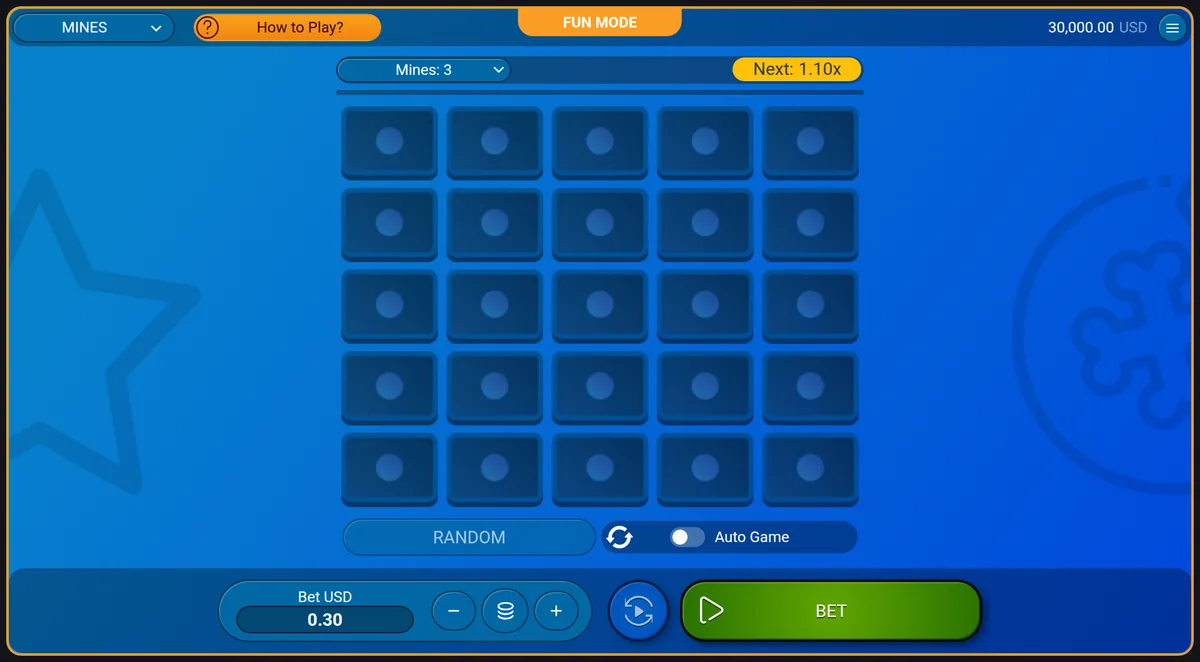
| Mines | open safe tiles on a 5×5 grid | up to 24 | mine count, 1 to 24 | usually none | you, or a mine |
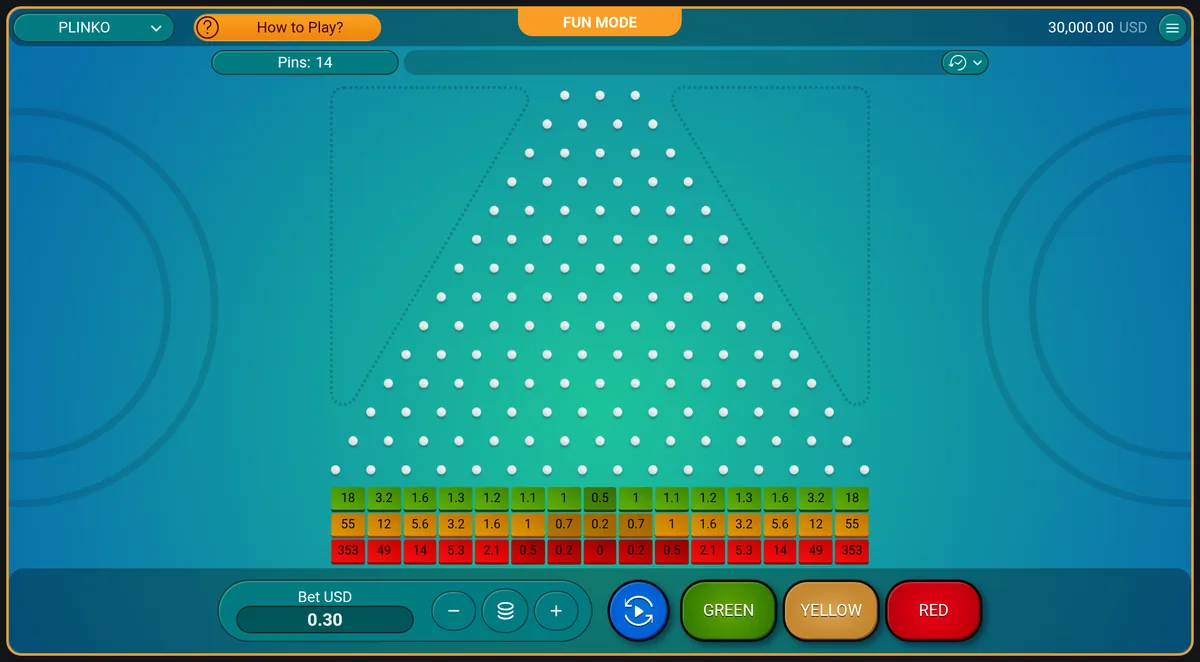
| Plinko | drop a ball through pegs into a bucket | none after the drop | rows and risk setting | n/a | the board |
| Limbo | name a target, see the round's number | none | the target you type | it is the whole game | the round |
Two of those are Chicken Road in another skin, two are one-press games, and one — Plinko — is not really the same bet at all.
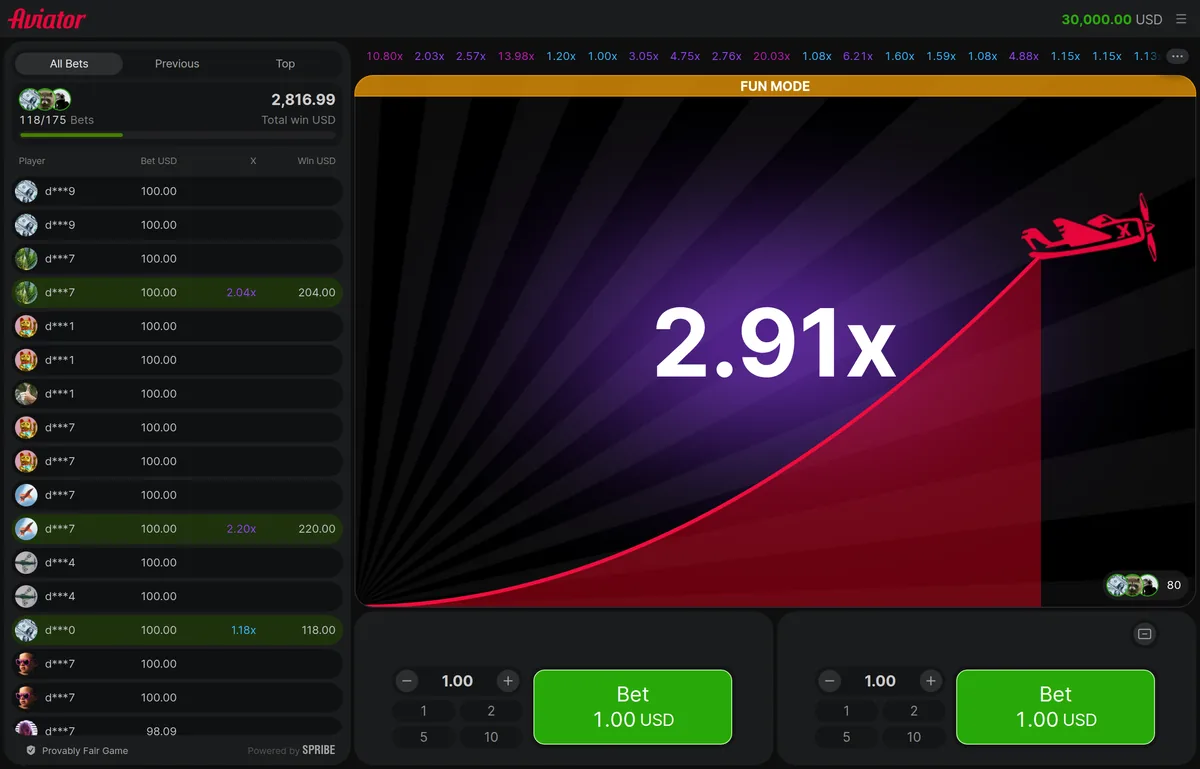
What makes a crash game a crash game
Strip the art off and four things are always present:
- A stake committed before anything moves. Nothing can be added or withdrawn mid-round.
- A multiplier that starts at 1.00x and rises. It applies to the whole stake, not to part of it.
- A stop the player cannot see coming. The round is settled on the operator's server before the animation runs; the screen is a replay of a decision already made.
- One button that converts the number on screen into balance. Press it in time and the multiplier is yours; press it late and the stake is gone.
That is the whole of it. To play crash games with crypto you add nothing to this list: the coin sits in the cashier, not in the round. Everything a crypto crash game adds on top — lanes, tiles, jets, pegs — is a way of packaging decision three and four. It is also the only place the games genuinely differ, which is why the comparison below is built on decisions rather than on graphics.
The arithmetic of a target multiplier
This is the part most crash gambling guides skip, and it is the part worth knowing before the first round.
Ignore the house cut for a second. In a game built so the average return is flat, aiming at a multiplier of x means the round reaches it roughly one time in x. Aim at 2x and you get there about half the time; aim at 10x and about one round in ten; aim at 100x and about one in a hundred. Multiply the hit rate by the payout and every target lands in the same place.
| Target | Roughly how often it lands | What a 10-round run usually looks like |
|---|---|---|
| 1.20x | about 5 rounds in 6 | many small wins, one loss undoes several |
| 2.00x | about 1 in 2 | swings of three or four losses in a row are ordinary |
| 5.00x | about 1 in 5 | most sessions are flat, the hits carry them |
| 10.0x | about 1 in 10 | ten straight misses is a normal evening |
| 100x | about 1 in 100 | a hundred rounds without one proves nothing |
Then add the house cut, which is taken from every round at every target. That is the whole of what makes the game a negative expectation: not the stop, not the setting, not the streak — the cut. No target multiplier, difficulty level, mine count or risk setting changes it. A 1.20x habit and a 100x habit differ in how the evening feels, not in what it costs over time.
Two consequences follow, and they are the practical reason this page exists:
- A losing streak is not evidence of anything. Ten misses at 10x is the ordinary case, not a rigged table and not a due win.
- Chasing raises the size of the swing, never the return. Doubling after a loss reaches the table limit or the end of a balance faster; it does not change the cut.
Where the six games actually differ
How many times you can be wrong. Chicken Road hands you thirty chances in one round. That is why it feels like a game of nerve, and why it empties a balance faster than the stake size suggests: every lane is a fresh opportunity to say “one more”. Aviator gives exactly one such opportunity, and it is a completely different evening.
Whether the exit can be automated. Crash games usually carry an auto cash-out field — type 2.00x and the round takes it for you. Chicken Road has nothing of the sort: every lane is pressed by hand, every time. This is the single biggest behavioural difference on the shelf, because an automated exit removes the reaction-time element and turns the session into the discipline question it always was.
Where volatility is set. Chicken Road puts it on a difficulty row, Mines on how many mines you bury, Plinko on the row count and risk setting, Limbo on the target you type, Aviator and JetX on the multiplier you are aiming at. The same dial under different names — and, in Mines and Limbo, a dial you can move mid-session, which is exactly what makes those two easiest to chase on.
Whether a feature can be bought. Chicken Road and Chicken Road 2 sell the bonus round for one hundred times the stake, which makes it the single largest bet in the game and the only one on the shelf that lets a player skip straight to the volatile part. Nothing else here has an equivalent; the rest are bought one round at a time.
Who built it. Aviator is Spribe's, JetX is SmartSoft's, Chicken Road and Chicken Road 2 are InOut Games'. Plinko, Mines and Limbo are originals-style titles that dozens of casinos and studios build in-house, which is why their payout tables and ceilings differ between versions carrying the same name.

What crypto changes, and what it does not
| Inside the round | Around the session |
|---|---|
| nothing at all | which networks the cashier counts |
| the multiplier ladder is identical | how many confirmations before the balance shows |
| the house cut is identical | whether the casino converts to a display currency |
| the ceilings printed on the card are identical | what a network fee costs at that moment |
| the stop is settled the same way | what is asked before a withdrawal is paid |
Every game here reads the display balance the cashier handed you and never sees the coin, so a crash game played in USDT runs exactly as it does in euros. Crash gambling with crypto is a statement about the cashier, not about the game. That side is on deposits and cash-outs, and the operators themselves are on the home page.
One practical consequence is worth spelling out because it costs real money. A feature buy priced at a hundred times the stake is priced in whatever currency the balance displays. On a balance shown in USDT a 20-stake buy costs 2,000 USDT; on a balance shown in mBTC the same card reads a very different number for the same press. Read the display currency before the first buy, not after.
Where to play crypto crash games
The best crypto crash games are the same games in every lobby, which is why this site spends no time ranking lobbies by their game list. The operator is where the difference between a paid win and a locked balance sits. Four columns, checked in this order, on any crash gambling site:
- The licence, in the regulator's own register — not the number printed in the footer. Who holds it, what the status line says, and when it was read. A live register entry is a fact; a number on a website is a claim.
- The coins the cashier lists, counted rather than assumed, along with the minimum deposit.
- The identity rule and its clause number. At sign-up, above a stated amount, or at the operator's discretion. No casino on this shelf promises never to ask, and a site telling you otherwise is selling something.
- The printed withdrawal cap, per day, week or month, with the clause. Where nothing is published, the honest word is not published — which is not the same as no cap.
Those four are recorded for every operator on the home page, and in full for the one we are paid to link to on the Vave review. The commercial relationship is stated there and on how we check rather than hidden behind a badge.
Read the game panel, not a review
One rule applies to all six, and it is why this page prints no RTP figures. Every one of these titles exists in multiple builds — Plinko and Mines especially, where a dozen different in-house versions sit under one name — and their numbers differ. The figure that applies to you is the one printed in the information panel of the lobby you are about to play in.
That is also why the rest of this site spends its time on operators rather than on games: once the panel has been read, the game is a known quantity, while the licence, the cashier and the withdrawal cap are the parts that decide whether a win becomes money.
Myths worth dropping before you start
- Predictors and signal bots. The round is settled server-side before the animation begins. A tool watching the animation is watching a replay.
- The history strip. Past multipliers are printed because they are interesting, not because they are predictive. Ten reds in a row change nothing about the eleventh round.
- ”The game is hot right now.” Nothing carries between rounds. There is no state to be hot.
- Provably fair as a guarantee of fairness. Where an operator publishes seeds and a verification page, it lets you confirm a result was not altered after the fact. It says nothing about the house cut, and it is not a promise the operator will pay out — that part is the licence and the terms.
Glossary
| Term | What it means on this shelf |
|---|---|
| Multiplier | the number the stake is multiplied by if you leave at that moment |
| Cash out | the press that converts the current multiplier into balance |
| Bust / crash | the stop that ends a round with nothing taken |
| Auto cash-out | a multiplier set in advance so the round exits for you |
| Volatility | how the wins are distributed: rare and large, or frequent and small |
| Feature buy | paying a fixed multiple of the stake to enter the bonus round directly |
| House edge | the cut taken from every round regardless of settings |
| Provably fair | a published seed scheme letting a player verify a result was not altered |
If you came here from Chicken Road
The honest recommendation is short. If you like the game for the deciding, try Mines — the same bet on a different board, with the risk set by your own hand. If you like it for the tension of the climb, that tension came from Aviator, and JetX is the same climb with a different jet. And if what you actually want is a result without a decision, Limbo is the shortest form gambling takes — worth knowing before you spend an evening on it rather than after.
If it is the road itself that has gone stale, the sorted version of this shelf is on Chicken Road alternatives.
And if none of it appeals, the practice board on the demo page is free and does not care how long you spend on it. It is the cheapest crypto crash game on this page in the sense that it costs nothing at all — and it is the only one on the shelf you can play with crypto without depositing any.